
Crash cymbals: where the energy comes from
Crash cymbals are the ones you use for accents and big moments in a song. They often mark the start of a chorus or land on a hit with the band, which may make them the cymbals that carry the most emotion on the whole kit.
Sixteen to eighteen inches is the standard range, but more drummers are choosing bigger sizes these days. Size and thickness change the character a lot: thinner models spread quickly with a delicate sound, while thicker ones bring more volume and power.
And lately, it is not only about being loud and flashy. Crashes with more complex characters, described as dark, dry, trashy, or warm, have become popular too.
Hi-hats: where nuance shows most
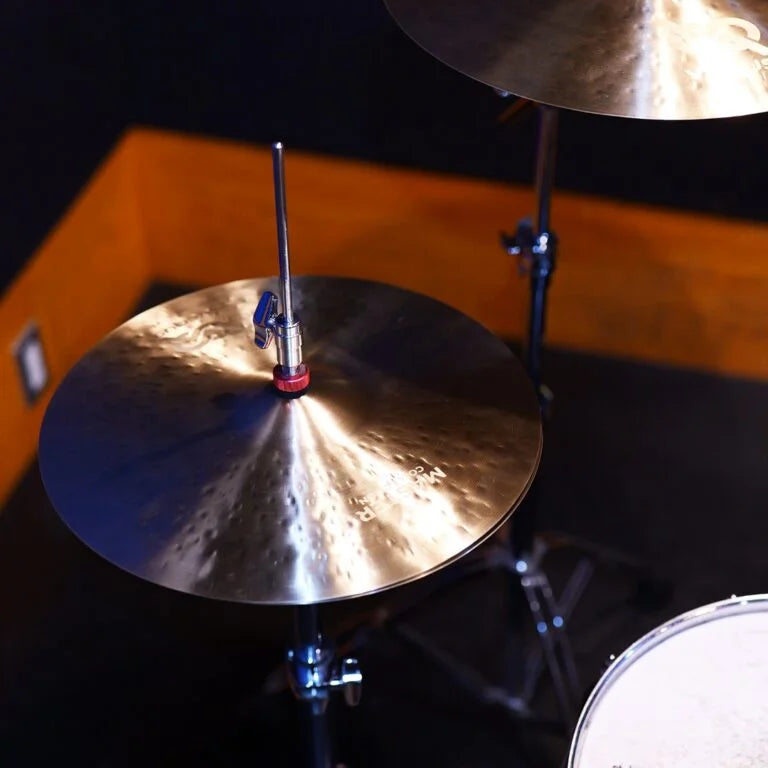
A hi-hat is a pair of cymbals, one on top of the other. It usually keeps time throughout a song, which makes it the part where a drummer’s timing and groove come through most clearly.
Fourteen inches is the most common size, but loose-sounding 15-inch hats and tight models of 13 inches and under are popular too.
A hi-hat is not just a cymbal that goes “chick-chick.” There is the airy sound when it is slightly open, the “chick” when it closes, how quickly it responds when you press the pedal: the differences in nuance are very fine.
In recording especially, the texture of the hi-hat alone can change how a whole song comes across.
Ride cymbals: the backbone of the groove
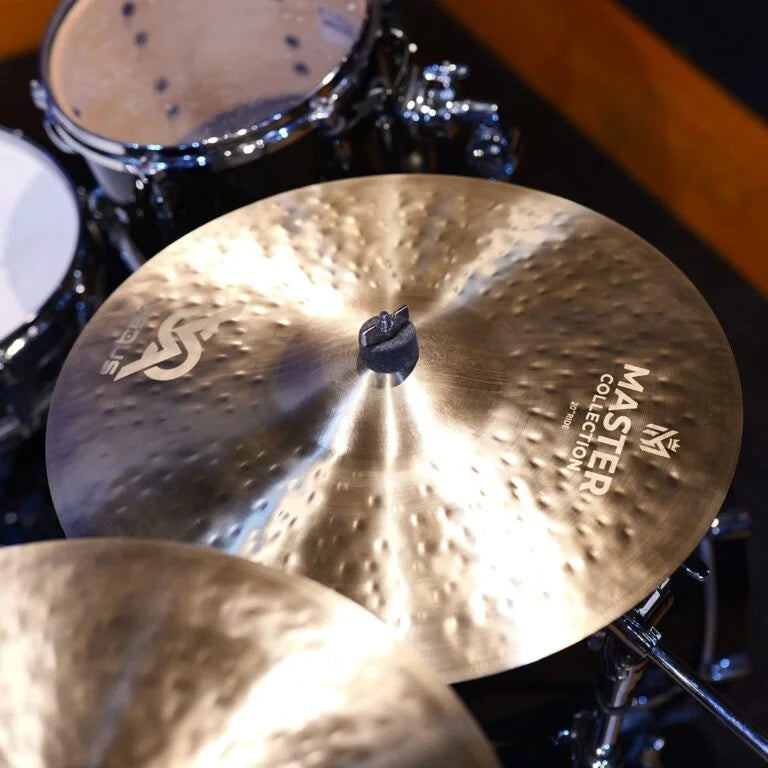
The ride is a large cymbal used mainly for keeping time. Sizes of around 20 to 22 inches are the norm. It is thicker than a crash, with a clear, well-defined stick sound.
What players want from a ride varies a lot by genre. In jazz, the focus is on a “legato” feel, where each stroke blends naturally into a wash of spreading overtones. In rock, the tendency is toward a clear ping that cuts through the band, and a strong bell sound.
More and more drummers also like “crash rides,” which crash naturally as well.
China cymbals: an effect with serious impact
A China cymbal has a distinctive shape, with an edge that flips up. Unlike a typical cymbal, its sound is noisy and raw.
The name “China” comes from its roots in Chinese gongs and traditional Chinese cymbals.
It started out as something quite different from today’s drum-kit cymbals. As it adapted to loud music such as rock and metal, it evolved toward a sound with a stronger attack that cuts through.
So the China cymbals most people use today keep elements of the traditional Chinese cymbal, but have developed in their own way as effect cymbals for modern music.
They are a fixture in rock and metal especially, but lately they also turn up in pop and fusion, where players use them as an accent that deliberately stands out.
Smaller sizes give a sharp, short attack; the bigger they get, the more explosive the spread. Drummers’ tastes split sharply on Chinas, which makes them one of the cymbals where a setup’s personality shows most.
For more on Chinas, see What Is a China Cymbal?
Splash cymbals: a short, beautiful accent
Splash cymbals are small, roughly 6 to 12 inches. They are higher in pitch than a crash, with a short decay.
Because they add an accent that flashes for just an instant, they are used a lot in fusion, pop, and technical playing. A splash does not shout for attention, but depending on how you use it, it can change the feel of a whole song.
Effect cymbals: special models with a growing presence
On today’s drum scene, it is not just the classic crash and ride. Effect cymbals with a special texture are becoming more and more popular.
With recording and video content everywhere, more and more situations call for a sound that leaves an impression in an instant, not just volume and cut.
The most typical of these are effect cymbals with holes cut into them.
Vented cymbals: special models with a trashy sound
Vented cymbals are effect models with several holes cut into the body of the cymbal.
Every maker has its own name for them, so you will run into all sorts of names for the same basic idea.
The holes change how the cymbal moves through the air, which gives a quick attack, a shorter sustain, noisy overtones, and an attack that feels like it bursts.
They are becoming a standard in loud genres and modern metal especially, but lately they are also used more and more in pop and fusion as textural accents.
Holes are not just for crashes, either; you will also find them on Chinas and splashes. A small vented splash makes a very sharp accent, and a large vented China can deliver an intensely trashy sound.
Another feature of these effect cymbals is that the names differ from maker to maker.
At VEQUS, the models with a few large holes are the VENT CRASH and VENT CHINA.
The models with many small holes make up the REVO line:
- REVO CRASH
- REVO SPLASH
- REVO CHINA
These different names are not just product names. They also hint at the sound concept each maker has in mind.
Stacks: the idea of playing the noise
One setup that has become especially popular in recent years is the “stack”: several cymbals mounted on top of each other to create a deliberately noisy, dry sound.
For example:
- Splash + China
- Crash + splash
- Two vented cymbals together
The combinations are wide open.
Instead of the beautiful, ringing sound of a normal cymbal, a stack gives you something short and dry:
“Kshh.”
“Pssh.”
“Tchk.”
That dry, punchy sound fits especially well in today’s pop, hip-hop, gospel, and R&B. These days there are also plenty of models built specifically for stacking.
Bell cymbals: the cup on its own
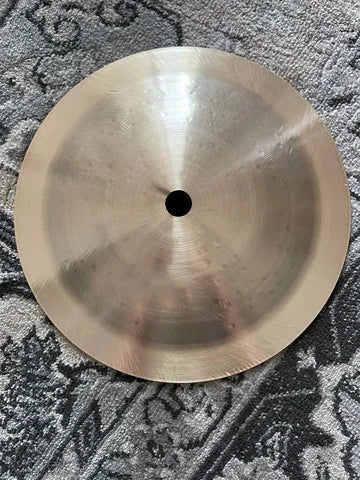
A bell cymbal looks like the cup of a ride cymbal, taken off and made into a cymbal of its own.
It is small, but it has a very hard, clear ping. The tone leans toward the high end, strongly metallic, with a sharp cut.
Progressive and technical drummers in particular tend to like them, because they hold their own even in complex passages. A bell can also work as a melodic accent, a different role from a crash or a China.
Size and thickness change a cymbal’s personality too
It is not only the type. Size and thickness change a cymbal’s personality a great deal as well. In general, the larger the cymbal, the lower and broader the sound; the smaller it is, the faster the response and the more focused the sound.
Take crashes, for example: a 16-inch tends to be all about cut, an 18-inch about power, and a 20-inch crash can spread out like a wall of sound.
Thickness matters a lot, too. Thin cymbals respond to a light touch and tend to open up quickly. Thick cymbals have more volume and attack, and hold their own even at high volume.
That said, the actual sound is not decided by thickness alone. Alloy, hammering, shape, and many other elements all make a big difference.
So it is not simply “thick means rock” and “thin means delicate.” The character depends on the balance of the cymbal as a whole.
How cymbals are made: what shapes their character
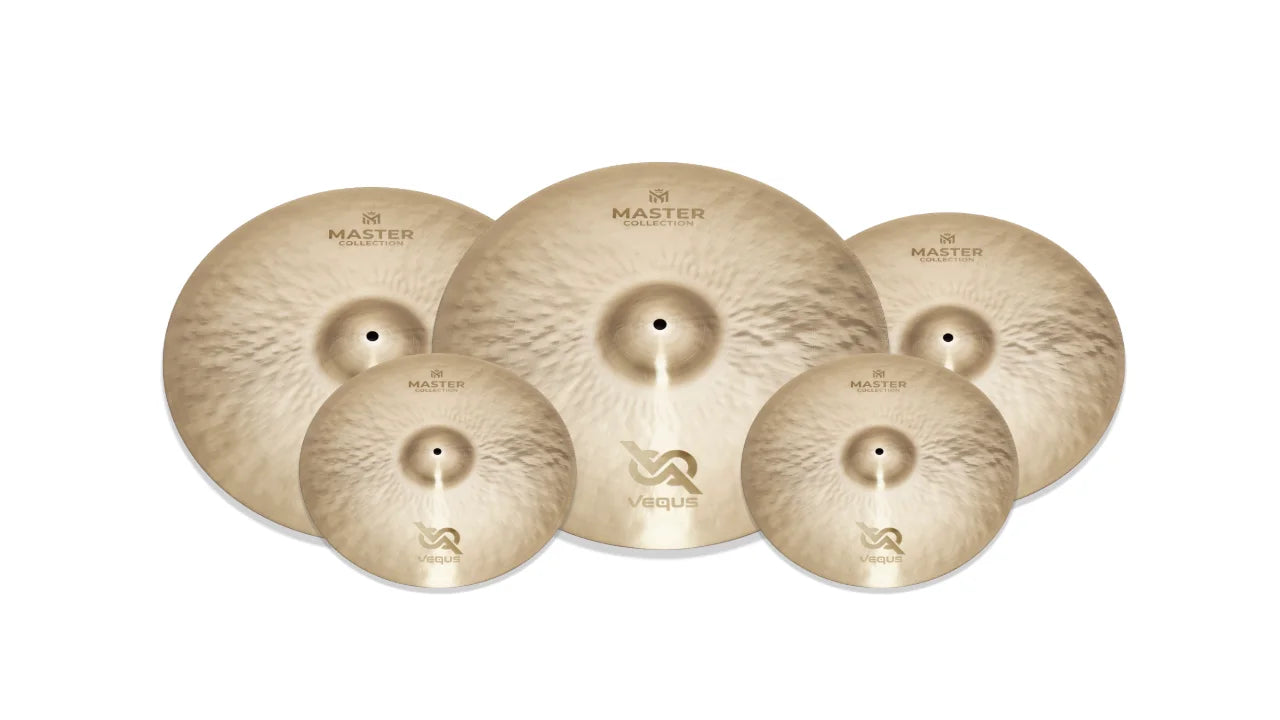
A cymbal is not just an instrument whose shape happens to differ. In practice, its sound character comes from many processes: the alloy, how it is formed, hammering, lathing (the grooves), and more.
The two best-known approaches are “cast” cymbals and “sheet” cymbals.
Cast cymbals follow a traditional method in which molten alloy is formed into cymbals one at a time. They tend to have complex overtones and a deep sound.
Sheet cymbals are made by working rolled metal sheets, and tend toward a bright, tight, straightforward sound.
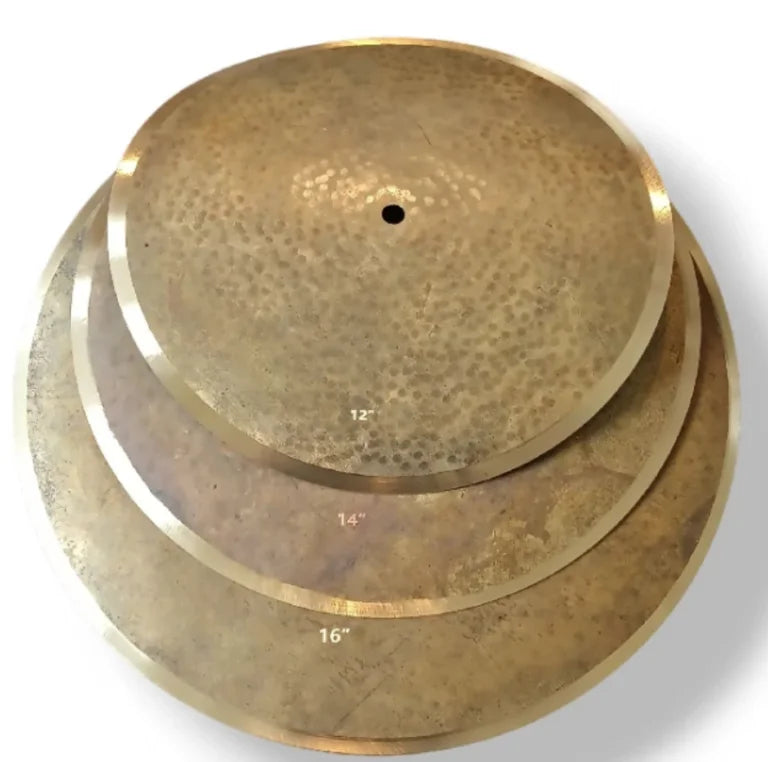
The dimpled marks you see on a cymbal’s surface come from what is called “hammering,” an important step that has a big effect on the sound. A cymbal is not just a metal plate. The processes themselves are part of designing its sound.
Cymbals change as you play them
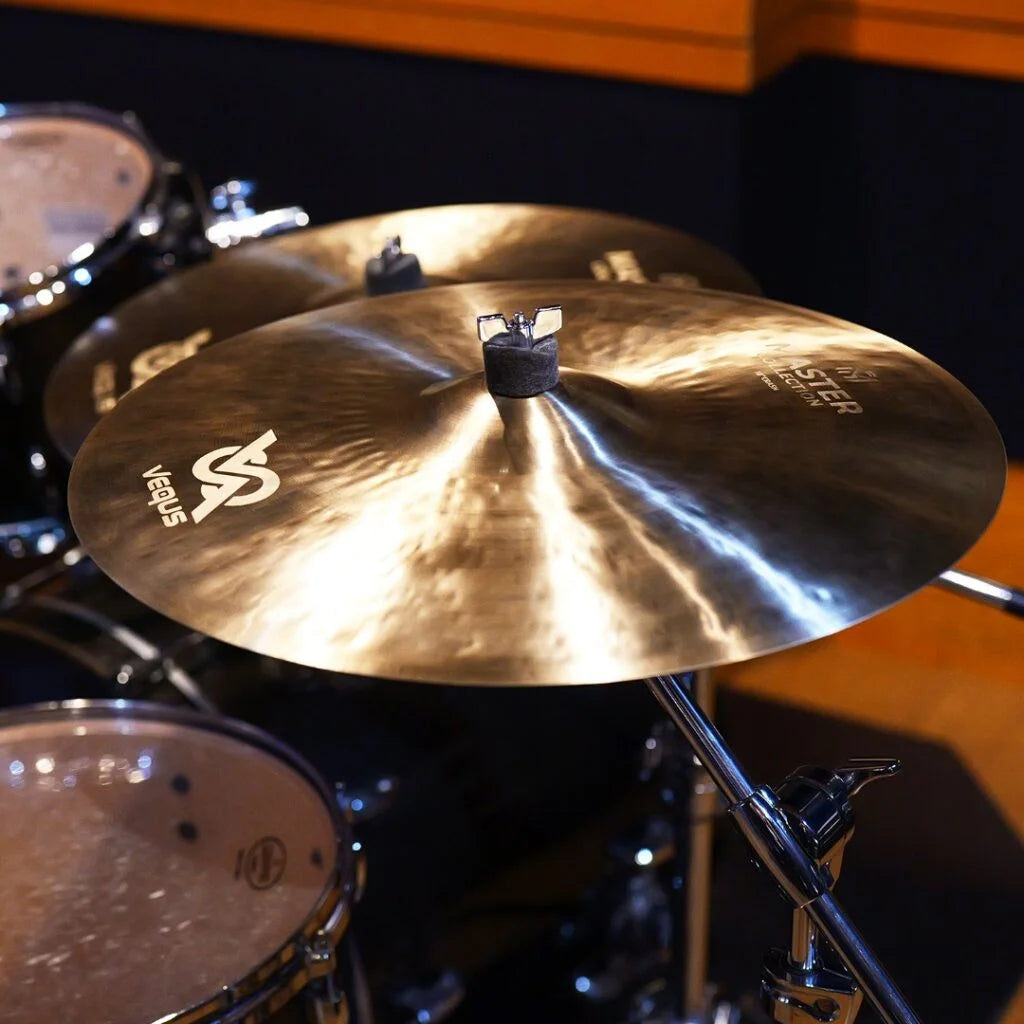
Because cymbals are metal, their character changes little by little with use and time. Oxidation from fingerprints and the air, and the vibration of years of playing, can change both the sound and the look.
Many drummers feel the sound settle in over time: the highs calm down a little, and the overtones soften. That is why a cymbal is sometimes seen not just as a consumable, but as an instrument you grow with.
Some drummers love the sharp edge of a brand-new cymbal; others prefer the settled voice of one that has been played for years.
Too much cleaning can also affect the surface finish and the sound, so plenty of players prefer to leave a cymbal looking well played. This change over time is part of what makes the cymbal such an appealing instrument.
There is no single right cymbal
Specs alone cannot tell you everything about a cymbal. Even at the same size and in the same series, hammering and finish change the character, and the sound you need depends on your playing style and the music you play.
That is exactly why so many drummers spend years searching for the one that suits them.
Cymbals shape a drummer’s sensibility and musical identity more than almost anything else. The more you learn about them, the deeper they get.
At VEQUS, too, what we value most is musical character, the part that specs alone cannot express.