
*This article introduces the culture of sound healing with gongs and the characteristics of their sound. It is not intended as medical treatment or therapy.
Gong baths in Europe today
In Europe, sound healing, and especially sessions using gongs (often called “gong baths,” as in bathing in sound), has gone beyond a passing trend and become part of everyday self-care.
In trend-setting cities such as London, Berlin, and Paris, gongs ring out not only in dedicated studios, but in all kinds of spaces: art galleries, churches, outdoor events.
In today’s busy world, the demand for “deep relaxation,” a chance to let the mind fully rest, keeps growing, and gong sessions have won strong support, especially among city professionals and creative people.
Why the sound of a gong?
In the history of percussion, the gong is one of the oldest instruments of all. So why is the gong, rather than some other instrument, the one chosen to take center stage in sound healing? There are physical and acoustic reasons, rooted in the nature of metal instruments.
Rich overtones
The moment you strike a gong, what you hear is not a single pitch (the fundamental). Countless complex frequencies sound at once, layered on top of each other as overtones. As these overtones swell and roll through the room, filling the whole space, they give listeners a distinctive sense of being enveloped.
A long, slowly fading sustain
A gong made from a high-quality copper alloy leaves a very long sustain after a single stroke. It is said that the more gradual the fade until the sound disappears, the more sensitive the listener becomes to each shift in the sound, and the deeper the sense of immersion.
Craftsmanship decides the quality of the sound
In sound healing, what matters most is the quality of the sound itself. Because the quality of the instrument translates directly into the quality of the space, practitioners in Europe are extremely particular about the material and the making of the gongs they use.
Traditional methods and the metal alloy
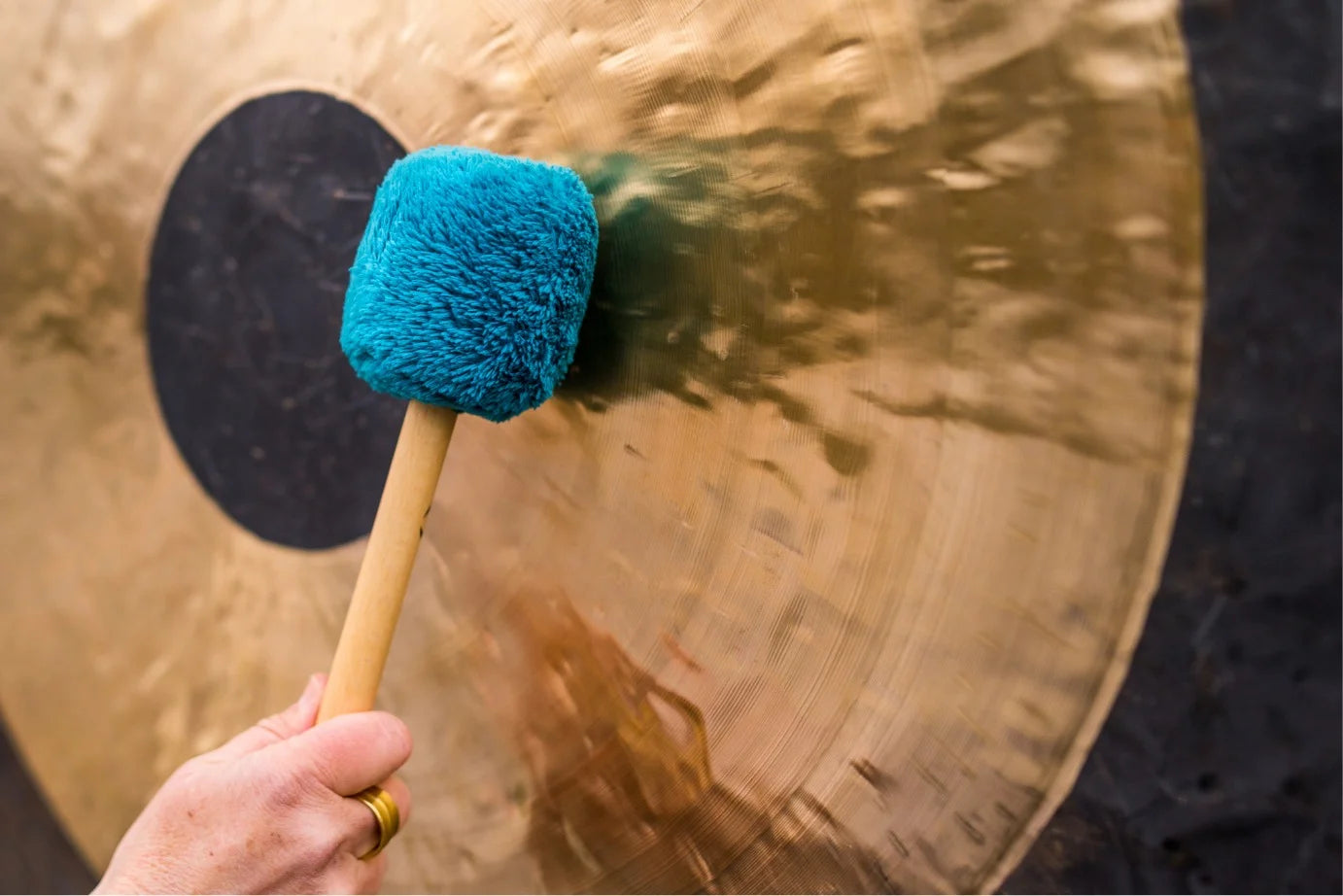
What shapes a gong’s voice is the makeup of its base metal and the skill with which it is formed. In general, high-quality cymbals and gongs use traditional copper alloys such as “B20 bronze” (80% copper, 20% tin). This alloy is hard and extremely difficult to work, but in return it can produce overtones that are remarkably deep, clear, and warm.
Hand hammering, one gong at a time
Mass production by machine can make a uniform sound, but not the deep, complex swell. Only through hand hammering, where craftsmen strike the metal surface piece by piece, fine-tuning its density and tension, does a gong take on a rich character all its own.
World-class quality for every space
In Japan, too, gongs are gradually being taken up by forward-looking yoga instructors, salon owners, and mental-wellness professionals.
But buying ready-made gongs from abroad as an individual comes with real hurdles in quality and shipping, and finding a gong with a truly high-quality voice that suits your own space and sensibility is not easy.
That is why what is needed now is not simply importing products and passing them along, but an approach from a trustworthy instrument brand that combines careful quality design and product direction in Japan with world-class manufacturing skills overseas.
Gongs made with VEQUS know-how
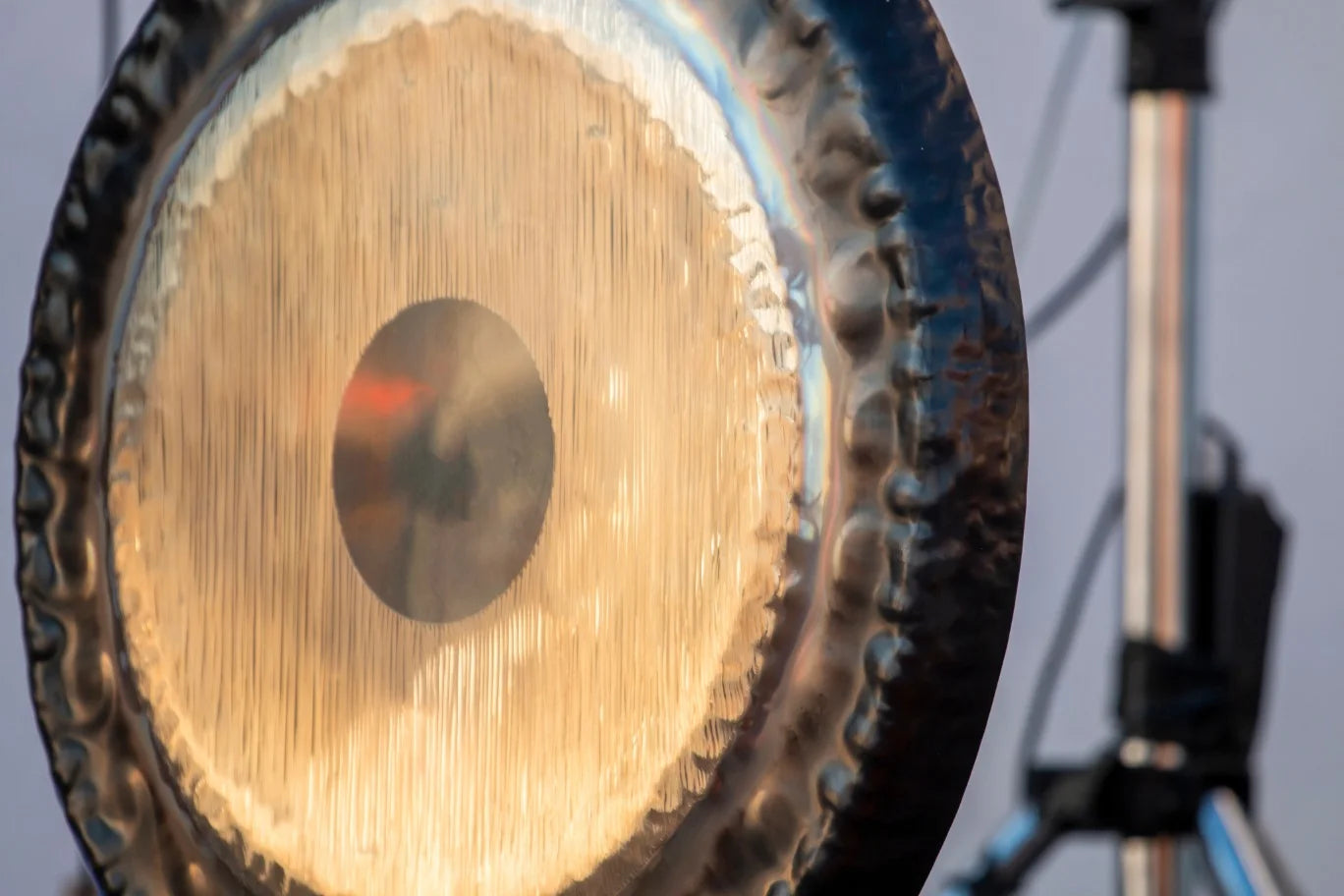
VEQUS is a cymbal brand built on the idea of delivering uncompromising Value and Quality to everyone. Our cymbals for drummers are quality-engineered in Japan and handcrafted one by one in partner workshops overseas with world-class techniques, using traditional manufacturing methods.
Our know-how in understanding metal and controlling overtones and resonance goes into not only our cymbals, but also our gongs.
Drawing on this strength, quality engineering in Japan combined with handcrafting in our partner workshops overseas, VEQUS also accepts custom gong orders built on our cymbal production line.
Please feel free to get in touch.